
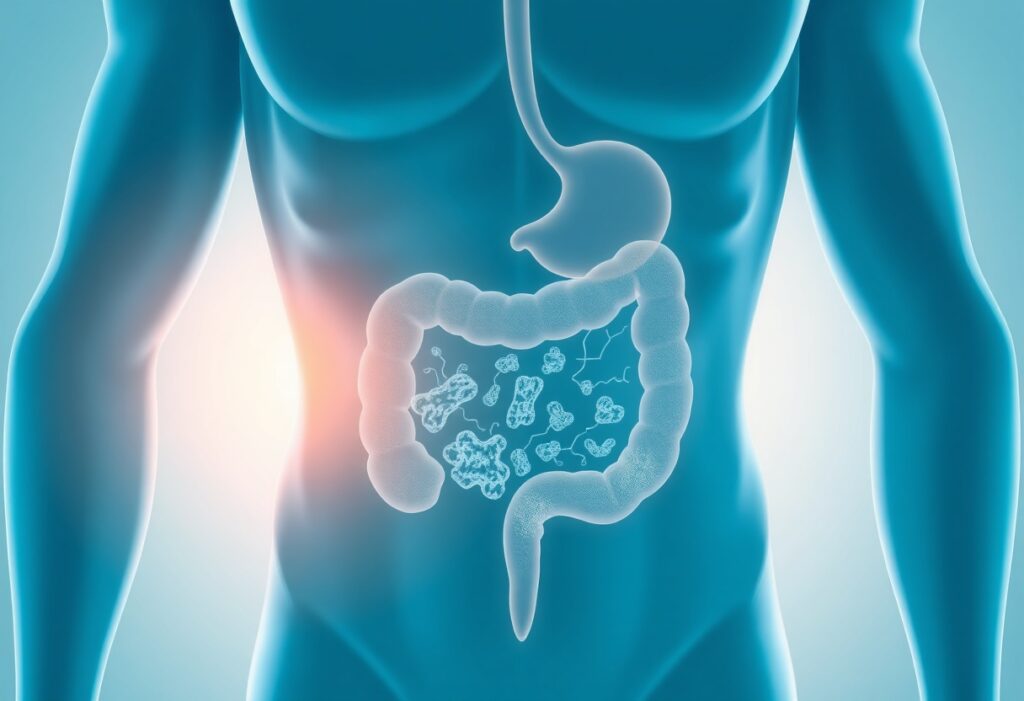
The Gut Microbiome and Its Role in Health
The gut microbiome is now widely recognized as a crucial component of human health. It plays an important role not only in immune function and metabolism but may also influence mood stability and susceptibility to fatigue. As research on the gut–brain and gut–immune connections has expanded, the concept of “supporting gut health” has become increasingly familiar to the public. Many people now pay close attention to their daily diet and lifestyle in an effort to maintain a healthy gut environment.
However, while the importance of gut health is well known, fewer discussions focus on how the gut microbiome changes over time. Questions such as how the gut environment evolves with age, or how these changes may relate to inflammation within the body, are less often explained in detail. Is the gut microbiome something that remains relatively stable once it is “improved,” or does it gradually shift as part of normal growth and aging—often without us noticing?
What Did This Study Examine?
To investigate how the gut environment changes with age, the study highlighted in this article conducted a longitudinal analysis using healthy rats. The animals were observed starting from the period corresponding to sexual maturity, which is often considered roughly equivalent to young adulthood in humans—approximately the early twenties. This life stage marks the end of physical growth and a transition toward physiological stability, making it a critical phase that may influence long-term health outcomes.
Rather than comparing different individuals at a single time point, the researchers followed the same animals over an extended period. Fecal samples were collected regularly from each rat, allowing the team to track how the composition of the gut microbiota changed over time. To analyze the bacterial communities, a comprehensive profiling method was used, enabling the identification of a wide range of bacterial taxa and shifts in their relative abundance. This approach made it possible to capture dynamic, time-dependent changes in the gut microbiome rather than static differences between age groups.
In addition to analyzing microbial composition, the study also assessed indicators related to intestinal inflammation and gut barrier function. By measuring inflammation-associated molecules alongside markers of intestinal permeability, the researchers were able to examine how changes in the gut microbiome were linked to physiological conditions within the body. This multi-layered analysis provided a broader perspective on how microbial shifts might relate to inflammatory processes and intestinal health.
One of the defining features of this study is that it focused on animals that appeared healthy, rather than using disease-induced or artificially manipulated models. In other words, the research aimed to detect early, subtle signals in the gut environment and inflammatory state before overt symptoms emerged. This design allowed the researchers to explore how age-related changes in the gut microbiome may begin quietly, potentially laying the groundwork for future health changes long before clinical signs become apparent.
Age-Related Changes in Gut Microbial Composition
The results of the study showed that the composition of the gut microbiome changes gradually with age, rather than remaining fixed once adulthood is reached. One of the most notable findings was that microbial richness and diversity did not change in parallel over time. As the animals aged, the number of bacterial species present in the gut increased. At the same time, however, overall microbial diversity tended to decline. This indicates that although more bacterial types were detected, the gut environment became increasingly dominated by a narrower subset of microorganisms, rather than maintaining a balanced distribution.
A closer look at the microbial composition revealed that two major bacterial groups—Firmicutes and Bacteroides—played a central role in these age-related shifts. As age increased, the relative abundance of Firmicutes gradually rose, while the proportion of Bacteroides declined. Importantly, this pattern was not a short-term fluctuation. Instead, it appeared consistently across the observation period, suggesting that these changes reflect a structured reorganization of the gut microbiome as part of normal growth and aging.
The study also found that the ratio between these two bacterial groups, commonly referred to as the Firmicutes-to-Bacteroides ratio, showed a positive correlation with body weight. This finding suggests that changes in gut microbial composition are not confined to the intestinal environment alone, but may be linked to broader physiological changes occurring throughout the body. Although shifts in the gut microbiome are not directly perceptible from the outside, the results indicate that internal microbial communities are steadily reshaped in parallel with physical development.
Taken together, these findings suggest that the gut environment is not something that simply remains in its “young adult” state over time. Instead, the optimal balance of gut bacteria may shift as the body ages and undergoes physiological transitions. Rather than labeling specific bacteria as inherently beneficial or harmful, this study highlights the importance of understanding when and how microbial composition changes across the lifespan.
Links Between Gut Microbiome Changes and Inflammation
The study next examined how age-related changes in the gut microbiome were associated with inflammation within the body. To address this question, the researchers measured multiple indicators reflecting intestinal inflammatory status, as well as markers related to gut barrier function. These physiological measures were then analyzed in relation to shifts in microbial composition. Interestingly, although inflammatory markers themselves did not show a dramatic increase with age, the number of bacterial taxa associated with inflammation and gut permeability increased over time.
One particularly notable finding was that, at younger stages, only a limited number of gut bacteria showed clear associations with inflammatory or barrier-related indicators. As the animals aged, however, a broader range of microbial taxa became linked to these physiological measures. This suggests that as the gut environment matures, the interactions between gut microbes and the host become increasingly complex. Rather than acting in isolation, gut bacteria may influence—and be influenced by—the body’s internal state in more diverse ways as age progresses.
Among the bacteria identified, Ruminococcus emerged as especially noteworthy. This genus showed consistent associations with markers related to inflammation and gut barrier function across both younger and more mature stages. Only a small number of bacterial taxa demonstrated such persistent involvement throughout the observation period, highlighting the possibility that Ruminococcus plays a key role in linking gut microbial dynamics with inflammatory processes.
Taken together, these findings suggest that inflammation may not arise suddenly, but instead may be preceded by gradual shifts in the relationship between the gut microbiome and the host. Even when an organism appears outwardly healthy, subtle changes within the gut environment may already be underway—changes that could contribute to an increased risk of inflammation later in life.
What These Findings Mean for Everyday Health
What this study suggests is that the gut environment is not something that only deserves attention when health problems arise. Changes in gut microbial composition—and in how gut bacteria interact with the body—may begin long before clear symptoms or overt inflammation become apparent. Even when an individual appears outwardly healthy, internal reorganization of the gut environment may already be underway, gradually altering its relationship with inflammation and gut barrier function over time.
The findings also highlight the limitations of viewing the gut microbiome through overly simple categories such as “good” versus “bad” bacteria. Age-related shifts in microbial composition are not necessarily signs of dysfunction, but may instead reflect normal physiological adaptation. From this perspective, a gut microbial balance considered optimal in early adulthood may not remain equally appropriate later in life. Understanding gut health therefore requires attention to context, including age and life stage, rather than relying on a single idealized microbial profile.
When translated into everyday life, this research suggests that supporting gut health involves more than trying to increase specific bacterial groups. Instead, it may be more important to consider the overall direction in which the gut environment is changing. Dietary choices and lifestyle habits should be evaluated not only for their short-term effects, but also for how they align with longer-term, age-related changes in gut microbiome structure.
Finally, the observation that certain gut bacteria remain consistently associated with inflammation and gut barrier function suggests that the microbiome may serve as more than a passive outcome of health status. Rather, it may act as an internal indicator reflecting subtle shifts within the body. In the future, monitoring changes in the gut environment could help identify emerging inflammation-related risks at an earlier stage—before noticeable symptoms develop.
Conclusion
In this article, we have reviewed research findings on how the gut environment changes with age and how these changes may be linked to inflammation. The study suggests that the composition of the gut microbiome is gradually reorganized as part of normal growth and aging, and that this process may be accompanied by subtle shifts in its relationship with inflammation and gut barrier function.
A particularly important point is that these changes were observed not in a diseased state, but in individuals that appeared outwardly healthy. The number, balance, and roles of gut bacteria are not fixed; instead, they continue to change in response to age and physiological conditions. This implies that maintaining gut health may not simply mean preserving a microbial profile once considered “ideal,” but rather paying attention to what kind of balance is most appropriate for the body at its current stage of life.
Overall, this research suggests that the gut microbiome may offer valuable clues for understanding future inflammation-related risks. Paying attention to gradual changes in the gut environment could provide a perspective for recognizing shifts in physical condition at an earlier stage. Recognizing that the gut environment is dynamic—and continues to evolve with age—may be an important step toward thinking about long-term health more thoughtfully.
References
Meng, C., Feng, S., Hao, Z., Dong, C., & Liu, H. (2022).
Changes in gut microbiota composition with age and correlations with gut inflammation in rats.
PLOS ONE, 17(3), e0265430.
https://doi.org/10.1371/journal.pone.0265430